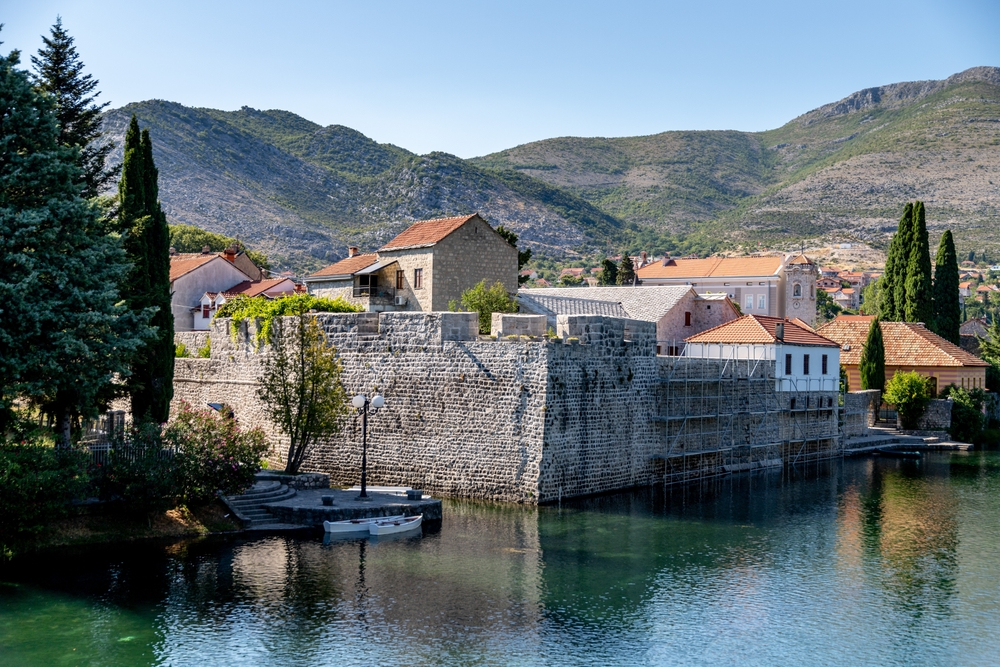
Ulcinj
Ulcinj, at the southern tip of Montenegro, blends a fortified Ottoman stronghold perched on cliffs, long sandy beaches and a distinctive Albanian identity. An Adriatic coast away from the beaten path.
Ulcinj is the southernmost city in Montenegro, just a few kilometres from the Albanian border. An ancient Ottoman settlement perched on a clifftop, it blends a fortified old town, long sandy beaches and a multicultural heritage of Albanian, Slavic and Ottoman influences. It is one of the rare Adriatic destinations where mosques, bazaars and beaches coexist within the same perimeter.
Practical information at a glance
- Access: regular buses from Podgorica (around 2 hours) and Bar; no railway station.
- Dress code: covered clothing required to enter mosques in the old town.
- Recommended duration: 2 to 3 days to combine the old town, beaches and surroundings.
- Local language: Albanian widely spoken alongside Montenegrin; English is understood in tourist areas.
What to see
The old town (Stari Grad) occupies a rocky promontory overlooking the sea. Its Venetian and later Ottoman ramparts enclose cobbled streets, timber-framed houses and two active mosques. Below stretches the Great Beach (Velika Plaža), a band of fine sand over twelve kilometres long, one of the longest on the eastern Adriatic. Further south, Valdanos beach nestles within ancient olive groves.
History and context
Founded by the Greeks under the name Colchinium, the city passed under Roman, Byzantine, then Venetian rule. The Ottomans conquered it in 1571 and established an important garrison. It became an active port and, according to some historical sources, a transit point for trade in the eastern Mediterranean. After the Congress of Berlin (1878), it was incorporated into Montenegro. Its Albanian population, now a majority, gives it a distinct identity in the country.
Highlights of your visit
The fortified old town
The ramparts offer direct views of the Adriatic Sea and, on clear days, the Albanian coast. The municipal museum, housed in the former fortress, displays archaeological objects spanning from antiquity to the Ottoman period. The interior streets are virtually deserted outside the summer season, making exploration easy.
Velika Plaža
This fine sandy beach stretches southeastward to the mouth of the Bojana river. It attracts kitesurf enthusiasts thanks to regular winds. The section closest to the town centre is busiest in summer; the ends remain quieter.
Ada Bojana island
Formed by a river delta at the mouth of the Bojana, Ada Bojana is a triangular island accessible by bridge. It is known for fish restaurants installed on floating rafts and for naturist beaches. The fluvial and marine environment is appreciated by fishermen and nature lovers.
Solana reserve
The former salt marshes north of Ulcinj form a protected wetland area. Flamingos, pelicans and herons stop here during spring and autumn migrations, making it a regionally recognised ornithological site.
Etiquette and visit guidelines
- Cover shoulders and knees when entering mosques in the old town.
- Remove your shoes before entering prayer spaces.
- Avoid visits during Friday midday prayer times.
Photography tips
Evening light is ideal from the old town ramparts: the sun dips behind the hills and tints the façades ochre. For Velika Plaža, early morning avoids summer crowds and offers raking light across the sand. Always ask permission before photographing people in Albanian residential quarters.
Location and access
Ulcinj is located at the far southern end of Montenegro's coastline, about 25 km south of Bar and around 100 km from Podgorica. The coastal road runs along the sea from Bar. Interurban buses connect Ulcinj to Podgorica, Bar and Shkodër (Albania). There is no direct rail link. The town centre and old town are walkable from main seafront accommodation, but the slopes up to the fortress can be challenging for those with reduced mobility.
Nearby
- Bar — port city with a ruined medieval old town and ferry terminal to Italy.
- Lake Shkodër — the largest lake in the Balkans, shared between Montenegro and Albania, less than an hour's drive away.
- Ada Bojana — river island at the mouth of the Bojana, floating raft restaurants and naturist beaches.
- Shkodër — first major Albanian city beyond the border, home to Rozafa fortress.
Frequently asked questions
June and September offer a good compromise: warm sea, fewer crowds than July-August. Spring (April-May) is ideal for the Solana bird reserve.
Yes. Velika Plaža has shallow zones suitable for children. The old town, with its streets and views, also appeals to younger visitors, but cobblestones and slopes require care with pushchairs.
Yes. The Sukobin border is just a few kilometres away. Shkodër is reachable in less than an hour. Check Albania's entry requirements for your nationality before departing.
Not easily. The streets are cobbled and steep, and access to the ramparts involves stairs. The waterfront and Velika Plaža are more accessible.
The euro is Montenegro's official currency. ATMs are available in the town centre. Small shops and local restaurants often prefer cash payment.
Yes. Velika Plaža benefits from regular winds that make it a recognised spot for kitesurfing and windsurfing, particularly in summer. Schools and equipment rental shops are available on site during the season.
Want to discover this destination?
Our local advisors design your tailor-made trip.