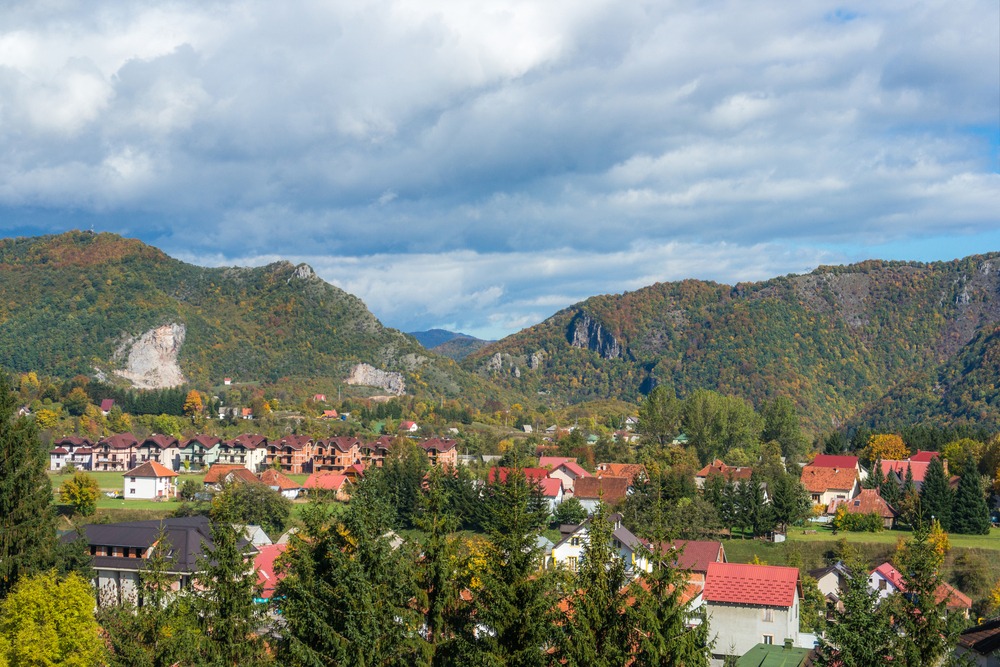
Vieux Bar
Stari Bar is a ruined medieval city perched at the foot of Mount Rumija, 4 km from modern Bar. Venetian ramparts, Ottoman mosques and a thousand-year-old olive tree make up this unique archaeological site on the Adriatic coast.
Perched on the foothills of Mount Rumija, the old town of Bar — Stari Bar in Montenegrin — is a ruined medieval city overlooking the coastal plain. Founded before the 11th century, it was successively ruled by the Byzantines, Slavs, Venetians and Ottomans before being abandoned following a fire and earthquake in the 19th century. Its ramparts, towers and collapsed mosques form a rare archaeological landscape on the Adriatic coast.
Practical information at a glance
- Admission: paid (archaeological site access ticket)
- Recommended duration: 1.5 to 2 hours to explore the ruins and ramparts
- Clothing: hiking shoes recommended — the ground is uneven
- Access: approximately 4 km from central Bar; accessible by taxi or car from the lower town
- Accessibility for people with reduced mobility: limited due to rough terrain and ancient paving
What to see
The site spans several hectares of ruins inhabited until the 19th century. You'll find gutted Ottoman houses, cisterns, public baths (hammam), a former Saint George Cathedral converted into a mosque, and partially restored Venetian ramparts. A thousand-year-old olive tree — one of Europe's oldest, estimated at over 2,000 years old — grows in the immediate vicinity of the site.
History and context
Bar is mentioned as early as the 10th century as an episcopal seat. The city came under Venetian rule in 1443, then Ottoman rule in 1571 — a transition that profoundly shaped its architecture. In 1878, during Montenegro's liberation, a fire destroyed Ottoman powder stores and devastated much of the town. Residents then descended to the plain to found modern Bar. The site is designated as a protected cultural monument.
Highlights of the visit
The ramparts and clock tower
The Venetian walls offer panoramic views of the Bar plain, the Adriatic Sea and, on clear days, the Albanian mountains. The Ottoman clock tower, still standing, is one of the site's few intact vertical elements.
The former Saint George Cathedral
Built in the medieval period, it was converted into a mosque under Ottoman rule. Its walls still bear traces of both periods: Romanesque arches and superimposed Islamic additions, a concrete testament to the historical layers of the place.
The thousand-year-old olive tree
A few minutes' walk from the main entrance, this protected tree is a landmark of the Bar region. Its gnarled trunk and exceptional dimensions make it a subject worthy of photography in its own right.
Photography tips
Morning light is ideal: it illuminates the ochre stone facades without backlighting. In late afternoon, the western ramparts offer beautiful raking light across the ruins. Avoid midday in summer — shade is rare on the site. No photography restrictions known for individual visitors.
Location and access
Stari Bar is located approximately 4 km northeast of modern Bar's port, at the foot of Mount Rumija. The road leading there passes through olive groves. From Bar, taxis regularly serve the site. Bar is connected to Podgorica by motorway and by the Podgorica–Bar railway line, one of the most spectacular in the Balkans. Bar's port offers maritime connections with Italy (Bari, Ancona).
Nearby attractions
- Lake Skadar — the largest lake in the Balkans, less than an hour's drive away, with Orthodox monasteries on its islets.
- Old Town of Ulcinj — a medieval fortified city on the sea, some thirty kilometers to the south.
- Old Town of Budva — a Venetian city on the coast, approximately 35 km to the north.
Frequently asked questions
Spring (April-May) and autumn (September-October) are the most pleasant periods: moderate temperatures and fewer crowds. In July-August, the heat on the unshaded site can be intense.
Yes. The ground is composed of ancient paving, irregular stones and slopes. Hiking shoes with thick soles are strongly recommended; lightweight sandals are not advisable.
Yes, the olive tree is a few minutes' walk from the archaeological site entrance. Most visitors combine the two without difficulty in the same half-day.
Access is very limited. The rough terrain, paving and slopes make the visit difficult for wheelchair users or people with reduced mobility.
The easiest way is by taxi from the center of Bar. It's also possible to go by rental car. There is no known direct urban bus service to the site.
Want to discover this destination?
Our local advisors design your tailor-made trip.