Moraca Monastery
Moraca Monastery
Orthodox monastery founded in 1252 in the Moraca canyon, about fifty kilometres from Podgorica, renowned for its 17th-century frescoes and icons.
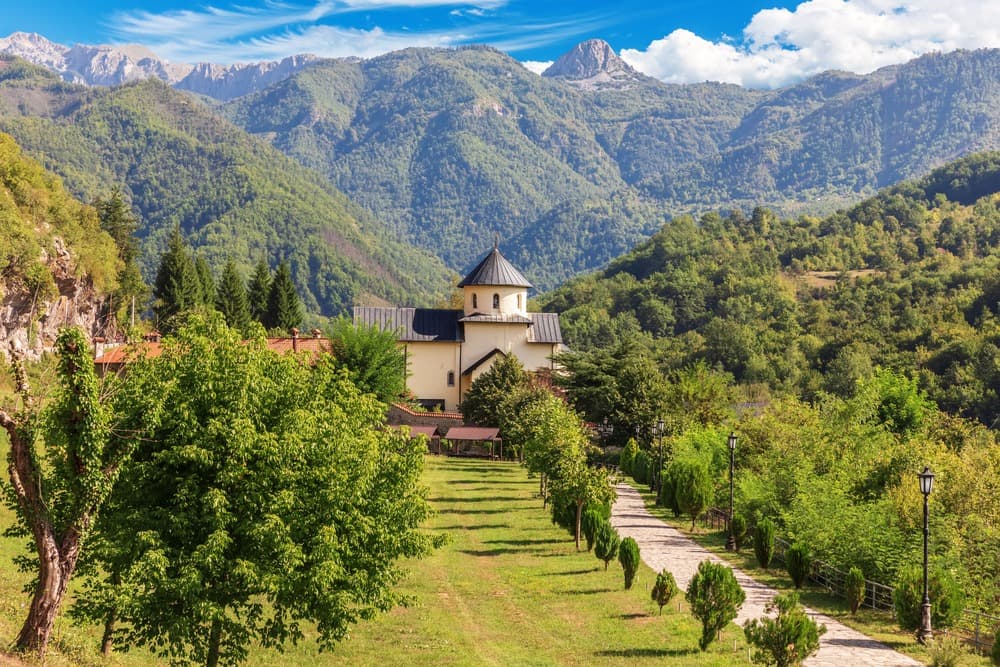
The Moraca Monastery ranks among the best-preserved medieval complexes in Monténégro. Founded in 1252 in the canyon of the Moraca River, about fifty kilometres north of Podgorica, it houses two churches, a cycle of 17th-century frescoes, and an iconostasis signed by major masters of post-Byzantine Serbian art.
Why visit Moraca Monastery
The site combines three interests rarely found together in one place in Monténégro: living Orthodox religious heritage, first-rate artistic production (wall paintings, icons, iconostasis), and striking natural surroundings between limestone cliffs and river. The monastery remains active, giving it the atmosphere of a lived-in place rather than a museum site. Entry is free and unrestricted, making it a natural stop on the route between Podgorica and the north of the country.
History
The monastery was founded in 1252 by Stefan Vukanović Nemanjić, son of Vukan Nemanjić, Grand Prince of the Great Principality of Serbia. The complex survived centuries of regional conflicts and endured a devastating fire in the 16th century. Reconstruction came only in the 17th century, after the establishment of the Patriarchate of Peć: with the support of Abbott Toma, Prince Vukic Vukcević financed the restoration of the estate and had the Church of Saint Nicholas erected in 1635.
In 1877, during a fresh Ottoman assault, fighters led by Abbott Mitrofan Ban repelled the attack and preserved the site. Further rehabilitation work took place in the 1930s, largely establishing the complex's current appearance.
What to see on site
The Church of the Dormition (Crkva Uspenja Bogorodice)
The main church preserves on its exterior walls paintings attributed to Djordje Mitrofanović, one of the major Serbian fresco painters of the 17th century. Inside, the vestibule presents a composition of the Last Judgment: Christ as judge surrounded by saints, the damned thrust toward the flames, and angels wrestling with small demons attempting to tip the balance.
The iconostasis brings together several remarkable works:
- The Virgin Enthroned with Child, Prophets and Hymn-writers, signed by Mitrofanović and dated 1617, preserved beside the sanctuary door;
- The icon of Saints Sava and Simeon, painted by Kozma in 1645;
- An icon depicting Saint Luke painting the Virgin and Child, considered a reference to the fresco of Our Lady of Philermos, now held in Cetinje.
The Church of Saint Nicholas (Crkva Sv Nikole)
More modest in scale, the Church of Saint Nicholas bears on its exterior walls frescoes much faded by the elements, though their original colours remain visible inside. Above the main entrance a representation of the Virgin and Child framed by two archangels survives.
The natural setting
On the eastern side, the Svetigora waterfall, fed by the Moraca River, marks the monastery's boundary. The site is surrounded by an enclosed garden planted with roses and hydrangeas, where beehives are kept.
Practical information
- Entry fee: admission is free.
- Dress code: the monastery is an active place of worship; modest dress covering shoulders and knees is required.
- Duration of visit: allow about 1 hour for the two churches and garden.
- Services: a café and camping area are available near the complex.
- Photography: generally tolerated outside; check at the church entrances.
When to visit
The monastery is accessible year-round, but the Moraca canyon is most comfortably traversed from late spring to early autumn (May to October). In summer, the cool air of the canyon floor and the shade of the mountains make a stop pleasant. In winter, the road remains passable but conditions may be difficult after snowfall, and some nearby excursions (canyons, waterfalls) are less rewarding at low water.
How to get there
The monastery is located on the Podgorica – Kolasin route, in the Moraca canyon.
- From Podgorica: about 50 to 60 km north along the road following the Moraca River; allow approximately 1 hour of travel. The route offers striking viewpoints over the canyon.
- From Kolasin: about twenty kilometres south along the main axis (E80/E65).
- By bus: regular services between Podgorica, Kolasin, Herceg Novi and Budva pass through the valley; ask the driver for a stop at the monastery.
Nearby attractions to combine
- The Mrtvitsa canyon, stretching about 9 km with walls reaching 1,000 to 1,100 m in depth;
- The old stone bridge over the Mrtvitsa, near Green Vir, built by Prince Danilo in tribute to his mother;
- The remains of the Turkish powder magazine near Kolasin, whose cross-shaped plan fuels a local legend about the Orthodox architect who built it;
- The Biogradska Gora National Park, accessible from Kolasin;
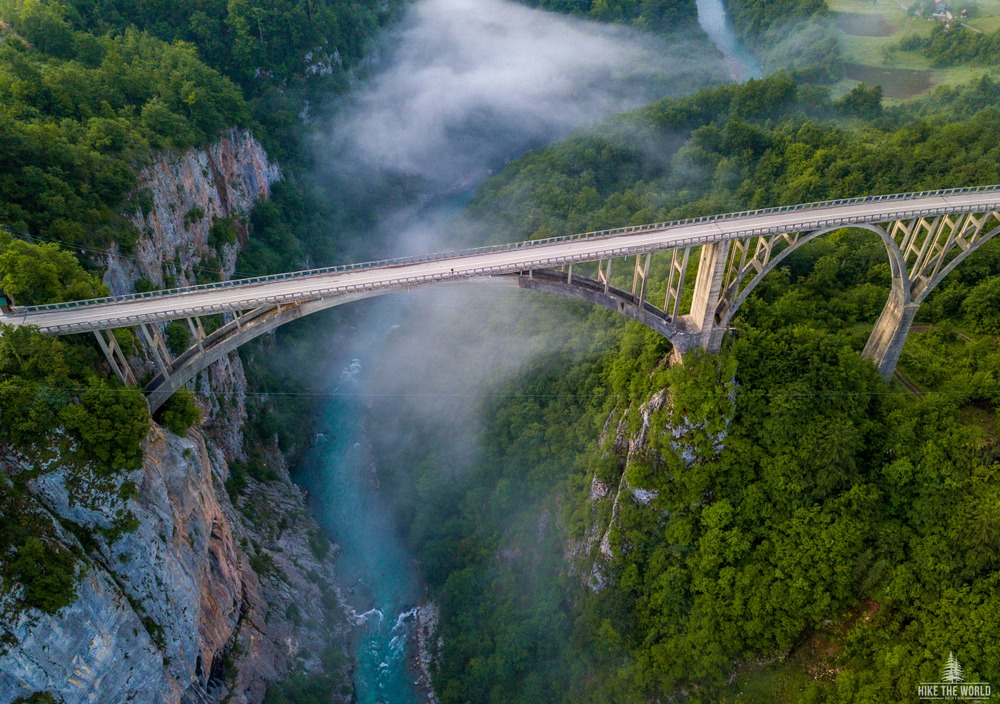
- The Durmitor National Park and the Djurdjevica Tara Bridge, further north.
Frequently asked questions
Frequently asked questions
Extend the experience
Moraca Monastery fits naturally into an itinerary linking the coast to the northern massifs, combining Orthodox heritage, national parks, and canyons. To design a bespoke journey incorporating this stop, explore our travel ideas for Monténégro.
Interested in this visit?
We can include it in your personalised itinerary.