Biogradska Gora National Park
Biogradska Gora National Park
UNESCO-listed primary forest, alpine lake and Bjelasica peaks: Biogradska Gora condenses Montenegrin nature across 54 km², near Kolasin.
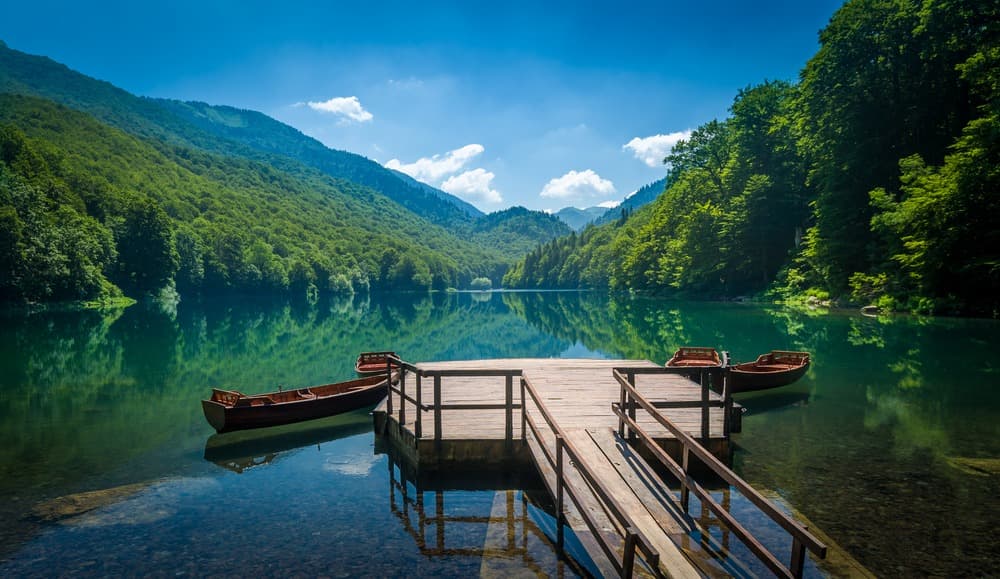
Biogradska Gora National Park protects one of Europe's last temperate primary forests, unfurling around Lake Biograd near Kolasin. Spanning 54 km², the park combines thousand-year-old forests, alpine pastures, summits of the Bjelasica massif and glacial lakes. It is one of Montenegro's four national parks and a site recognized for its biodiversity.
Why visit Biogradska Gora
The park is listed in the UNESCO Man and the Biosphere Reserve Network. Its pristine forest is home to trees over 500 years old, making it one of the continent's rarest intact primary forests. The species density is remarkable for a site of this size: 220 plant varieties, 86 tree species, 150 bird species, 10 mammal families, three trout species and approximately 350 insect species. The terrain, ranging from the lake shore (1,094 m) to the Bjelasica ridge above 2,000 m, allows you to experience several ecosystems in a single day's walk.
History
The region bears the mark of several military episodes: battles against the Ottomans, clashes during the First Balkan War in 1912, then activity by Tito's antifascist Partisans during the Second World War. This presence of Yugoslav resistance partly explains the protected status granted to the site after the war.
The national park project dates back to 1935, but official status was not granted until 1952, alongside the reconstruction of facilities destroyed during the conflict. Protection has remained strict ever since: no logging, regulated activities, and preservation of the primary forest in its original state. Shepherds continue to drive their flocks to alpine pastures in summer, perpetuating pastoral use compatible with the park's status.
What to see and do
Lake Biograd
The heart of the park and main entry point, Lake Biograd (Biogradsko jezero) sits at 1,094 m altitude and covers 230,000 m². A trail of roughly 3.5 km circles it on flat terrain, accessible to everyone. Near the visitor centre, a 21 m viewing platform offers sweeping views over the water and surrounding forest. On-site you'll find an information point, a restaurant and a camping area. A tourist train connects the entrance to the lake, practical with children or in hot weather.
Hiking and glacial lakes
About a dozen marked trails crisscross the park, starting mainly from Kolasin and Mojkovac, as well as villages of Berane and Andrijevica. Routes climb toward the Bjelasica massif, which shelters five glacial lakes, the most renowned being Pesica jezero. Landscapes alternate between dense forests, wildflower meadows in early summer and rocky ridges. Five mountain huts allow you to extend the experience over two or three days, some rustic, others recently renovated.
Other activities
- Raspberry and blackberry picking in summer (authorized zones)
- Regulated fishing on certain water bodies (permit required)
- Mountain biking on forest trails
- Birdwatching, particularly rewarding in spring
When to visit
Late spring and summer (June to September) offer the best conditions: clear trails, pleasant temperatures and access to all huts. In summer, average daytime temperature hovers around 22 °C, dropping to around ten degrees at night. Autumn is highly photogenic thanks to the beech forest's colors, but early snow can close alpine trails as early as November. In winter, the area remains accessible but most high-altitude activities are off-limits; the nearby Kolasin 1450 ski station (located near but not within the park) then becomes the focus for skiing enthusiasts.
Practical information
- Admission: modest per-person fee, free for young children. Additional charges for camping and boat trips on the lake.
- Duration of visit: allow half a day for the lake circuit and nearby trails, two to three days to explore Bjelasica and its glacial lakes.
- Equipment: hiking shoes essential, windproof jacket even in summer (changeable weather at altitude).
- Accommodation: camping by the lake, mountain huts, hotels and guesthouses in Kolasin and Mojkovac.
How to get there
The park is approximately 10 km from Mojkovac and 16 km from Kolasin. A car remains the most flexible option, via the main road that follows the Tara valley. Without a vehicle, taxi from Kolasin or Mojkovac is a common solution (modest fare). The park is also well-positioned relative to the Bar–Belgrade railway, which serves Kolasin and Mojkovac: a train journey plus taxi is entirely feasible from Podgorica or the coast.
Nearby
- Kolasin — logistics hub for the park, mountain atmosphere
- Durmitor National Park — Tara canyon and more dramatic glacial lakes
- Djurdjevica Tara Bridge — iconic structure above the canyon
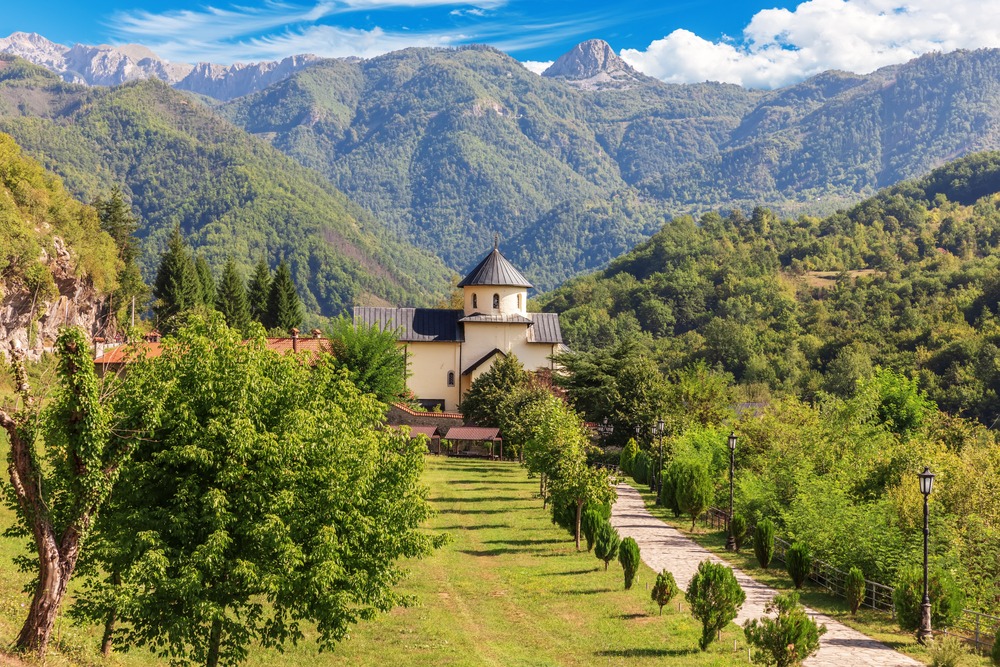
- Moraca Monastery — 13th-century Orthodox monastery on the road to Podgorica
Frequently asked questions
Frequently asked questions
Half a day is enough to circle Lake Biograd and enjoy the viewing platform. To explore the Bjelasica glacial lakes and stay in a hut, allow two to three days.
Yes. The trail around the lake is flat and suited to children. The tourist train linking the entrance to the lake and boat trips are also family favorites.
Yes, an official camping area is set up near the lake. Five mountain huts also accommodate hikers on the heights of Bjelasica.
June to September, when high-altitude trails are clear and huts are open. May and October work for lower-altitude hikes, though weather is more unpredictable.
Both parks are complementary. Biogradska Gora is more compact, more forested and ideal for a short or family visit. Durmitor is larger, more mineral and offers more dramatic alpine scenery.
Include Biogradska Gora in your trip
The park fits naturally into an itinerary combining Montenegro's mountainous north and Adriatic coast. Our advisors craft bespoke stays blending hiking, heritage and alpine villages: consult our Montenegro travel ideas to help plan yours.
Interested in this visit?
We can include it in your personalised itinerary.