Lovćen National Park
Lovćen National Park
Overlooking Cetinje, Lovćen National Park combines a 6,220-hectare wooded massif, the mausoleum of prince-poet Njegoš, and the village of Njeguši, birthplace of Montenegrin charcuterie.
Overlooking Cetinje, Lovćen National Park protects a limestone massif that gave its name to Montenegro. Less frequented than the Durmitor National Park, it combines dense forest heritage, highland villages, and the mausoleum of prince-poet Petar II Petrović Njegoš, erected on one of the country's most emblematic summits.
Why visit Lovćen National Park
Lovćen's uniqueness stems from the convergence of high-mountain geography and powerful national memory. Mount Lovćen reaches 1,749 m and gave the country its name: Crna Gora, "Black Mountain," referring to its wooded slopes. This region long resisted Ottoman advance into the Balkans, making it a defining symbol for Montenegrins.
The visit encompasses three distinct focal points: a natural sanctuary spanning 6,220 hectares, a mausoleum perched above 1,600 m in elevation, and the village of Njeguši, birthplace of the Petrović Njegoš dynasty and the unofficial capital of Montenegrin charcuterie.
History
The park was established in 1952, though the massif's symbolic significance predates it by centuries. Petar II Petrović Njegoš, prince-bishop, philosopher, and poet, regarded as the country's tutelary figure, died in 1851. He had expressed a wish to be buried on Mount Lovćen.
His remains were not transferred to the mountain until 1925. During World War II, Italian forces attempted to destroy the tomb with artillery without success. The current mausoleum, designed by sculptor Ivan Meštrović, was completed in 1974.
What to see and do
The Njegoš Mausoleum
The mausoleum of Petar II Petrović Njegoš stands at 1,660 m elevation, at Jezerski Vrh Pass. Access is gained through a tunnel carved into rock, followed by a staircase of 461 steps. The chapel features a mosaic of gold-plated tiles covering the archway, and a sarcophagus bearing the state emblem and a cross, sculpted in stone to represent Njegoš's secular and spiritual authority.
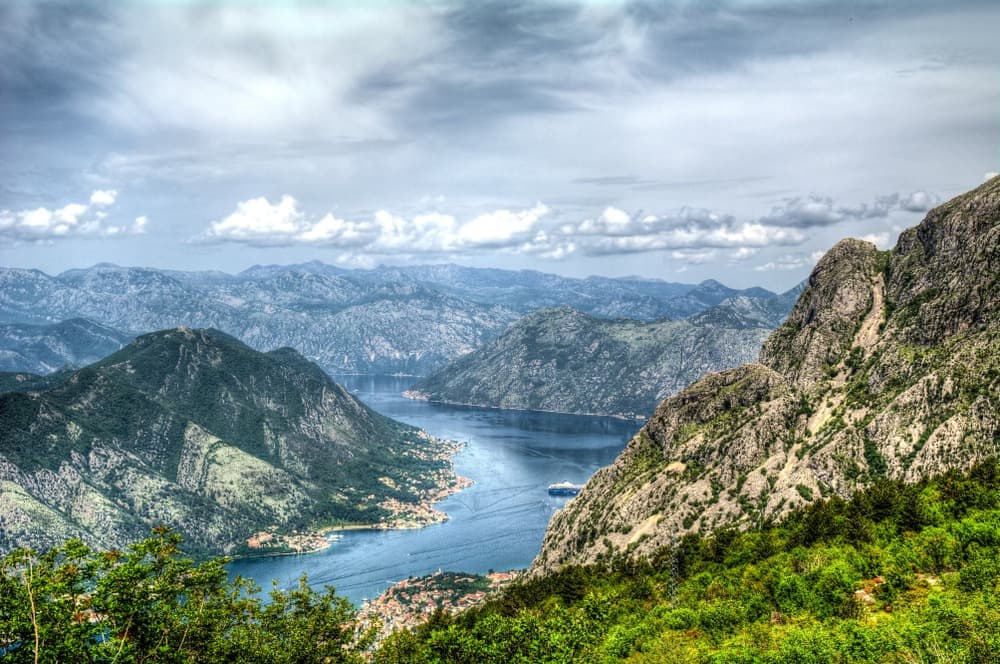
Behind the monument, an observation platform offers, on clear days, views of the Bay of Kotor (Boka Kotorska), the Italian coast beyond the Adriatic, and the village of Njeguški. On the opposite side lies a panorama of Lake Skadar and, to the north, the massifs of Komovi, Prokletije, and Durmitor.
Forests and highland villages
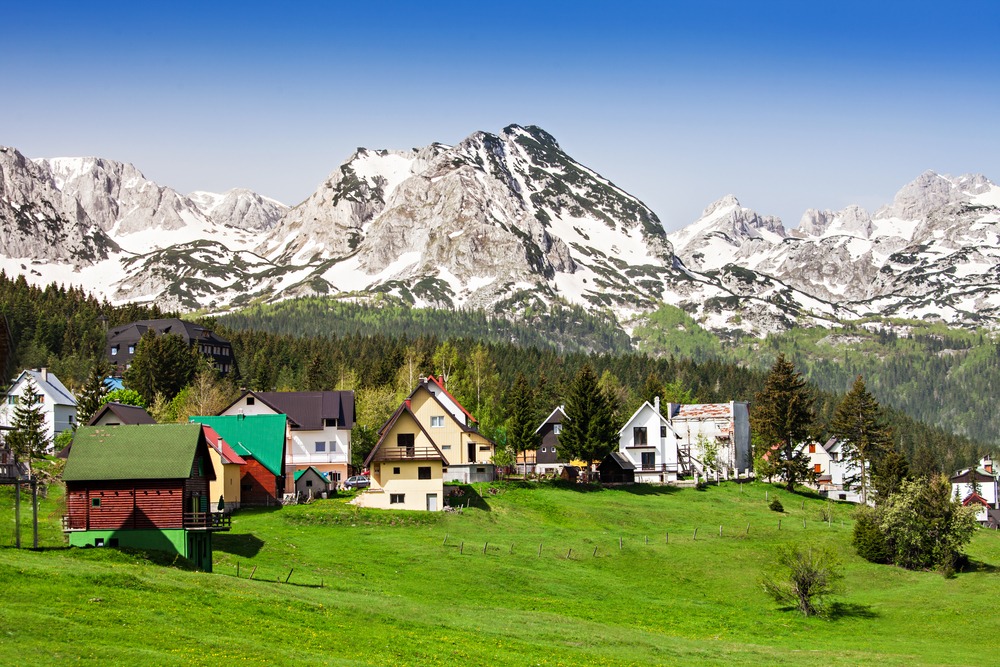
Forest covers two-thirds of the park, which encompasses nine distinct natural habitats and harbors several indigenous bird species of Montenegro. Trails traverse highland clearings where picturesque hamlets such as Guvna persist, with their katun dwellings (seasonal mountain huts) and active livestock herders.
The village of Njeguški
North of the park, Njeguški is the native soil of the Petrović Njegoš dynasty. Visitors can tour the birthplace of Petar Petrović Njegoš and especially stop to savor the two local specialties: smoked cheese and Njeguški pršut, air-dried mountain ham. From the village, the famous serpentine road—a succession of hairpin turns—winds back down toward the Bay of Kotor.
Sports and activities
The park lends itself to hiking and mountain biking on numerous marked trails, as well as cross-country skiing in winter on the snowiest slopes. The Ivanova Korita Adventure Park offers treetop courses for ages 5 and up, with around fifteen activities per circuit and professional supervision.
When to visit
Late spring and summer (May to September) offer the most favorable conditions: passable trails, fully accessible mausoleum, pleasant temperatures at altitude while the coast swelters. July and August bring more visitors, particularly midday.
Autumn is rewarding for beech-forest colors and mountain light. In winter, snow frequently blocks access and several services close; visits are confined to brief weather windows, including cross-country skiing.
How to get there
The park is easily reached by car from Cetinje (7 km) or Kotor (20 km), the latter route using the spectacular serpentine road. Without a vehicle, the simplest option remains taxi from Cetinje at reasonable rates, or private tourist shuttles departing from Kotor and Budva.
Regular public transport to the park entrance is virtually nonexistent, making personal transport or organized excursions far preferable.
Practical information
- Area: 6,220 hectares
- Maximum elevation: 1,749 m (Mount Lovćen)
- Mausoleum access: via tunnel and 461 steps; good physical fitness recommended
- Rates: moderate park entry, modest surcharge for mausoleum, bike rental by hour or day (verify current prices on-site)
- Mausoleum hours: extended access during peak season, restricted hours in winter, possible closures in bad weather
- Recommended visit duration: half-day for mausoleum and Njeguški, full day including hiking
Nearby to combine
The former royal capital of Cetinje, 7 km away, naturally complements the visit with its museums and monasteries. To the north, Biogradska Gora National Park and Durmitor National Park round out a nature circuit. For a spiritual interlude heading north, the Morača Monastery deserves a stop.
Frequently asked questions
Frequently asked questions
Plan your trip
Lovćen National Park integrates naturally into an itinerary linking the Adriatic coast with the former royal capital and northern massifs. To build a custom itinerary, explore our trips to Montenegro.
Interested in this visit?
We can include it in your personalised itinerary.