Budva
Budva
Medieval old town, Riviera beaches and lively nights: the complete guide to visiting Budva, a gem on the Adriatic coast of Montenegro.
Budva is beautiful and festive, far more captivating than its larger counterpart Podgorica, the capital, situated just sixty kilometres away. On the Adriatic coast, the Budva Riviera is a beach paradise, alive day and night. The old town hosts an open-air venue where world-class cultural events take place annually.
History
Historical records show that Budva ranks among the oldest settlements on the Adriatic coast. According to legend, the city was founded over 2,500 years ago by Cadmus, a prince of Phoenicia, and his wife Harmonia.
In the early medieval period, Budva, then a Byzantine city, was occupied by an Illyro-Roman community, as well as Italian and Greek merchants. Slaves, under Byzantine imperial rule, inhabited the counties.
From 1420 to 1797—nearly 400 years—the Venetians controlled Budva. After the decline of the Venetian Republic, the Austro-Hungarian Empire took possession. During World War II, several people were killed during antifascist battles. Budva was liberated from Nazi rule on November 22, 1944. Initially reintegrated into Yugoslavia, it now belongs to the newly independent state of Montenegro.
Discovering Budva
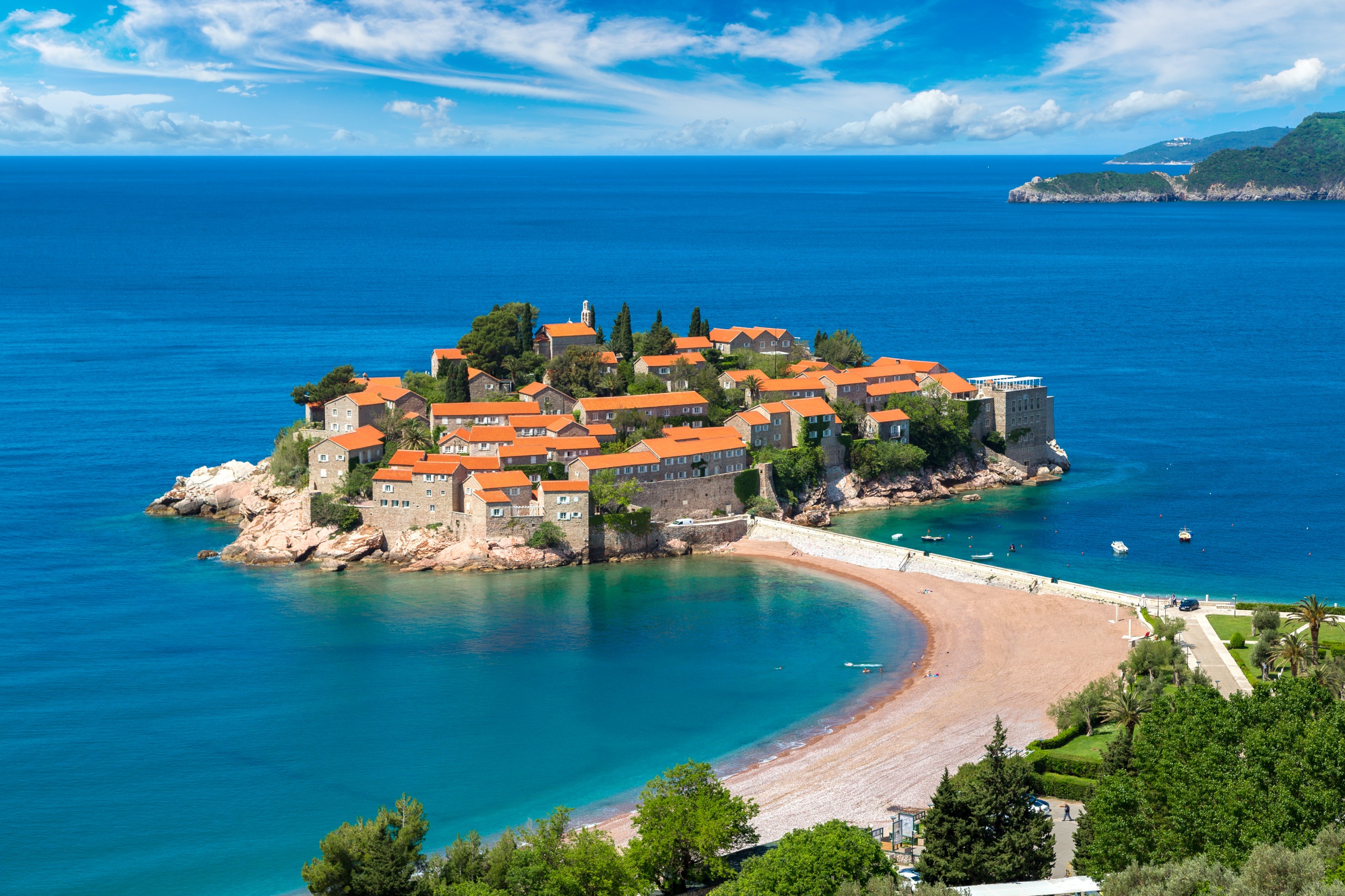
In Budva, above all, take your time to enjoy the pleasures of the beach along the 12 km coastline, facing the Mediterranean Sea. Crystal-clear waters and warm sunshine on the coast will do you a world of good. You can swim along the entire waterfront. Far to the west, Mogren Beach is ideal for a nocturnal swim. Not far from the centre, Richard's Head makes for a relaxing detour during a day of sightseeing. Slovenska Beach, the largest beach in the city, connects the marina and Park hotel. The small Pizana is also located near the marina. If you wish to avoid crowds, near the mouth of the Budva River, settle onto the newly developed Ocase Beach.
Timeless Charm
Beyond the beaches, there is much to discover in Budva. The city has built up a rich heritage. The imprints of ancient civilisations can be found in local traditions, but especially in the architecture of the city. Admire churches in Greek and Roman style. Then marvel at the powerful Venetian walls erected to counter the Ottomans. Stroll through stone-paved alleyways that lead unexpectedly to charming fountains. The quaint houses are picturesque, with their twin windows and red roofs.
Budva Citadel, built in the 15th century, occupies the most important part of the old town. First visit the Church of Saint Mary and the former barracks building, then wander through ancient squares and imagine the atmosphere of these places in the past. The citadel also hosts a summer stage that features theatrical performances and varied concerts during the festival season.
Nightlife in Budva
Budva may be 2,500 years old, but party-goers bring a youthful spirit when they flood the terraces and bars, as well as trendy clubs as night falls. Budva's nightlife is exhilarating. It begins on the beaches, in restaurants renowned for their seafood specialities. The evening continues in lounges for those seeking a peaceful cocktail. Dedicated night owls have access to clubs with a torrid atmosphere, where music is often mixed by international DJs. The most popular venue is the Trocadéro. Beyond that, you'll also find casinos in Budva where you can entertain yourself or test your luck against players from other parts of Europe.
Cultural Events in Budva
Budva Theatre City is the city's largest cultural event. For two summer months, Budva transforms into a vast open-air stage, with the citadel in the old town as its focal point. All architectural and spatial assets are utilized for this occasion. The festival offers a rich programme refined according to high artistic standards. You'll enjoy theatrical performances, exhibitions, evening readings and more…
In late June, Budva hosts the international music festival "Song of the Mediterranean", during which you'll have the privilege of witnessing accomplished musicians at work. The event lasts three days and takes place on Slikar Square, facing the walls of the old town.
Practical Information
Climate in Budva
Mediterranean climate in Budva is characterised by hot, sunny summers and mild, snow-free winters. The weather is beautiful every day in July and August, which is why the city is a very popular destination during summer holidays. Spring and autumn are also pleasant, despite a slightly higher risk of rain.
Three international airports are located near Budva. Tivat Airport is the closest, but it has very limited connections. Podgorica Airport is a better option. You can also arrive at Dubrovnik Airport in Croatia, then take a bus to Budva afterwards.
The city is also served by train and ferry.
There's no better way to fully immerse yourself in Budva's exquisite atmosphere than by walking. To reach sites outside the city centre, you can take the bus or a taxi. Moreover, prices are quite reasonable.
What to Do in Budva?
- Enjoy beach leisure or simply relax by the shore
- Explore Budva Citadel
- Try clubbing nights at the Trocadéro
- Attend Budva Theatre City in summer
- Take a small cruise along the Adriatic coast, etc.
Want to discover this destination?
Our local advisors design your tailor-made trip.