Tara Canyon
Tara Canyon
The Tara Canyon, one of Europe's deepest gorges, cuts through Durmitor National Park in northern Montenegro. Rafting, hiking and breathtaking views from the Đurđevića Tara bridge.
The Tara Canyon stretches for approximately 82 kilometres across northern Montenegro, carved by the Tara River through the Durmitor massif. With walls reaching depths of up to 1,300 metres in places, it ranks among Europe's deepest canyons. Designated a UNESCO World Heritage site as part of Durmitor National Park, it draws hikers, kayakers and rafting enthusiasts into a landscape of preserved primary forests.
Quick reference facts
- Access: from Žabljak, the main gateway town to Durmitor National Park, approximately 10 km from the canyon's shores depending on your entry point.
- Entry: access to Durmitor National Park is paid; the canyon itself is accessible from several points without an additional ticket, but check conditions with the park.
- Recommended duration: half a day for a visit to the Đurđevića Tara bridge and overview of the canyon; a full day or more for rafting or hiking.
- Best time: May to September for rafting; spring and autumn for hiking with fewer crowds.
- What to wear: hiking boots recommended on trails; equipment provided by operators for rafting.
What you'll see
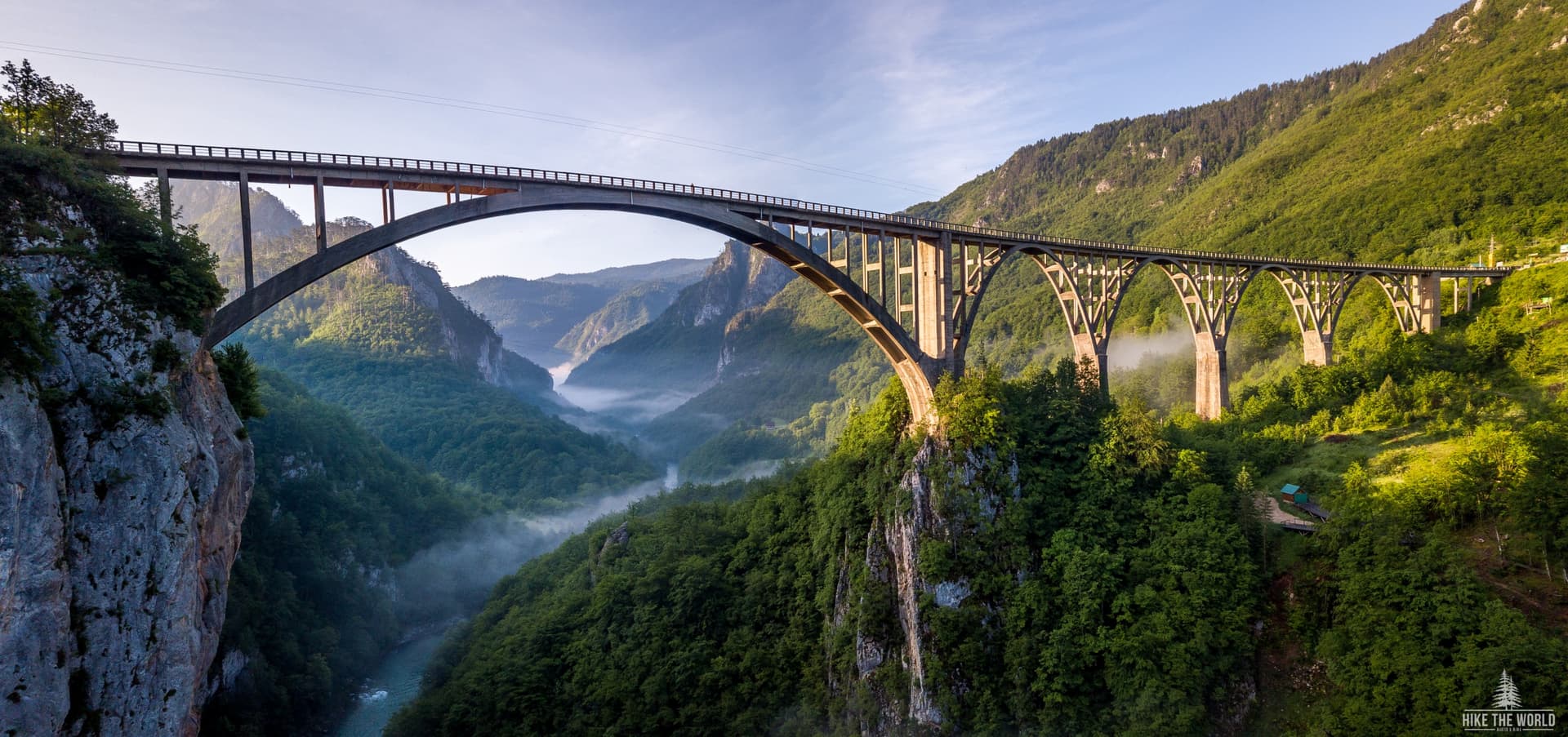
The Tara River flows through a limestone riverbed in shades of blue-green, flanked by pine and spruce forests. The canyon's vertical walls alternate between bare cliffs and dense vegetation. The Đurđevića Tara bridge, a five-arch concrete structure built in the 1940s, spans the canyon at over 150 metres above the river and offers a breathtaking viewpoint across the entire site.
History and context
The canyon formed over millions of years through the Tara River's erosion of the Durmitor limestone plateau. The region has been inhabited since antiquity, but it was during the 20th century that it became accessible to tourism. The Đurđevića Tara bridge, completed in 1940, was partially destroyed during the Second World War by Yugoslav partisans to impede Axis forces' advance, then rebuilt after the war. In 1980, Durmitor National Park and the canyon were inscribed as UNESCO World Heritage sites.
Highlights of the visit
Rafting on the Tara
The navigable stretch between Splavište and Šćepan Polje is one of the Balkans' most renowned rafting routes. Class II to IV rapids suit various skill levels. Local operators based in Žabljak offer day trips or multi-day excursions with camping.
The Đurđevića Tara bridge
This bridge is the canyon's most visited access point. A zip line allows crossing above the void for thrill-seekers. The adjacent viewpoint offers an unobstructed view of the river's meanders below.
Hiking trails
Several trails run along the canyon's edges or descend towards the river. Durmitor National Park offers marked routes of varying difficulty, some crossing through hundred-year-old beech and pine forests designated as a UNESCO biosphere reserve.
Wildlife and flora
The canyon is home to endemic fish species in the Tara, notably the marble trout. The riverside forests rank among Central and Southern Europe's last primary forests. Lynx, brown bears and golden eagles frequent the surrounding massif.
Photography tips
Morning light illuminates the eastern canyon walls from the Đurđevića Tara bridge. In late afternoon, golden tones on the limestone cliffs are particularly striking. To photograph the river from above, a wide-angle lens better captures the canyon's depth. From a raft, a waterproof case is essential.
Location and access
The Tara Canyon lies in northern Montenegro, at the heart of Durmitor National Park. Žabljak, at approximately 1,450 metres altitude, is the main logistical base. The drive from Podgorica takes roughly two and a half to three hours depending on the route. From Kotor, allow about three hours. There is no direct public transport to the canyon; car rental or organised excursions from Žabljak or Podgorica are the most practical options.
Nearby attractions
- Durmitor National Park — mountain massif featuring Black Lake, glaciers and peaks exceeding 2,500 metres.
- Žabljak — mountain town and departure point for expeditions into Durmitor and the canyon.
- Black Lake (Crno jezero) — glacial lake a few kilometres from Žabljak, accessible on foot from the town centre.
- Piva Canyon and Piva Lake — another spectacular canyon in northern Montenegro, approximately one hour's drive away.
Frequently asked questions
The rafting season generally runs from May to October, with optimal water levels in spring thanks to snowmelt. In July-August, river levels drop and rapids are less intense, but conditions remain pleasant.
No. Operators offer routes suited to beginners on the calmest stretches. Sections with more technical rapids are reserved for groups with minimum experience or guided by qualified instructors.
Yes. The Đurđevića Tara bridge is accessible by car and offers a direct view of the canyon. Hiking trails also allow you to explore the edges and descend towards the river without specialist equipment.
The most common route passes through Mojkovac and climbs towards Žabljak, taking roughly two and a half to three hours by car. There is no direct bus service to the canyon; organised excursions from Podgorica or Kotor are available through local agencies.
The Đurđevića Tara bridge remains accessible in winter if roads are clear, but rafting is suspended. The Žabljak area is then more popular for skiing on Durmitor. Check road conditions before departing, as mountain passes may be snow-covered.
Yes, and it's the most common combination. Žabljak serves as a base for both sites. One day suffices for the canyon (rafting or hiking), and another for exploring Black Lake and Durmitor's trails.
Want to discover this destination?
Our local advisors design your tailor-made trip.