Durmitor National Park
Durmitor National Park
A karst massif of the Dinaric Alps inscribed on the UNESCO World Heritage list, Durmitor National Park brings together 18 glacial lakes, the Tara Canyon and the summit of Bobotov Kuk.
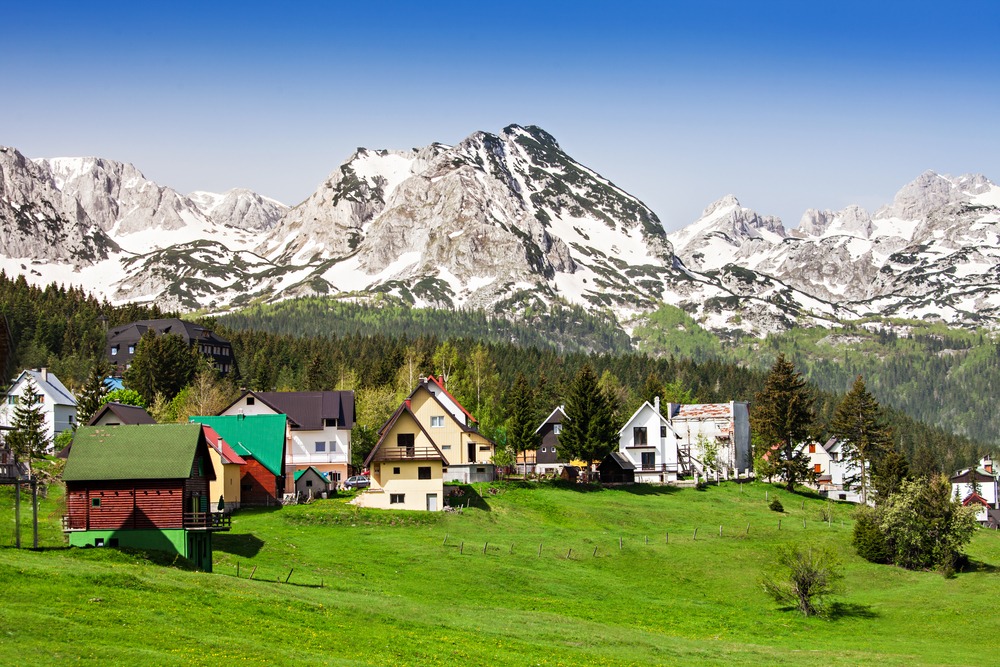
In northern Montenegro, the Durmitor National Park protects a karst massif of the Dinaric Alps, its limestone peaks rising above 2,000 m and its 18 glacial lakes. Inscribed as a UNESCO World Heritage site since 1980, it spreads around the small town of Žabljak, the natural starting point for exploring this region. This guide brings together everything you need to prepare your visit: what to see, when to come, how to get there and what to do nearby.
Why visit Durmitor National Park
The park concentrates within a relatively compact area several emblematic landscapes of the Balkans: limestone peaks, glacial lakes, coniferous forests and one of Europe's deepest canyons, that of the Tara. Its biodiversity — nearly 900 plant species recorded and wildlife including golden eagles, bears and deer — makes it one of the peninsula's richest natural sanctuaries. It is also a four-season destination: hiking, rafting and mountain biking in summer, skiing in winter.
History and protection status
The massif is classified as a royal reserve in 1907, under the reign of King Nikola I, who particularly appreciated the region. Protection strengthened after the Second World War: Durmitor is declared a national park in 1952, then incorporating several forested and lacustrine areas around the Bobotov Kuk summit.
In 1980, UNESCO inscribes it as a World Heritage site, in recognition of the geological and ecological value of the massif and the Tara Canyon. The perimeter today covers approximately 390 km² and extends from Žabljak to the Piva Gorge.
What to see and do in the park
Glacial lakes and peaks
The park has 18 glacial lakes, locally nicknamed the "eyes of the mountain". The most accessible and visited is Black Lake (Crno Jezero), just a few kilometres from Žabljak: a flat path of approximately 3.5 km circles it, ideal for a first glimpse of the massif. Snake Lake (Zminje Jezero), more discreet, is reached by a forest walk.
Experienced hikers aim for Bobotov Kuk, the park's highest peak at 2,523 m. The ascent takes a full day and requires some mountain experience. On the way to Poda village, a beautiful black pine forest is worth a detour.
The Tara Canyon
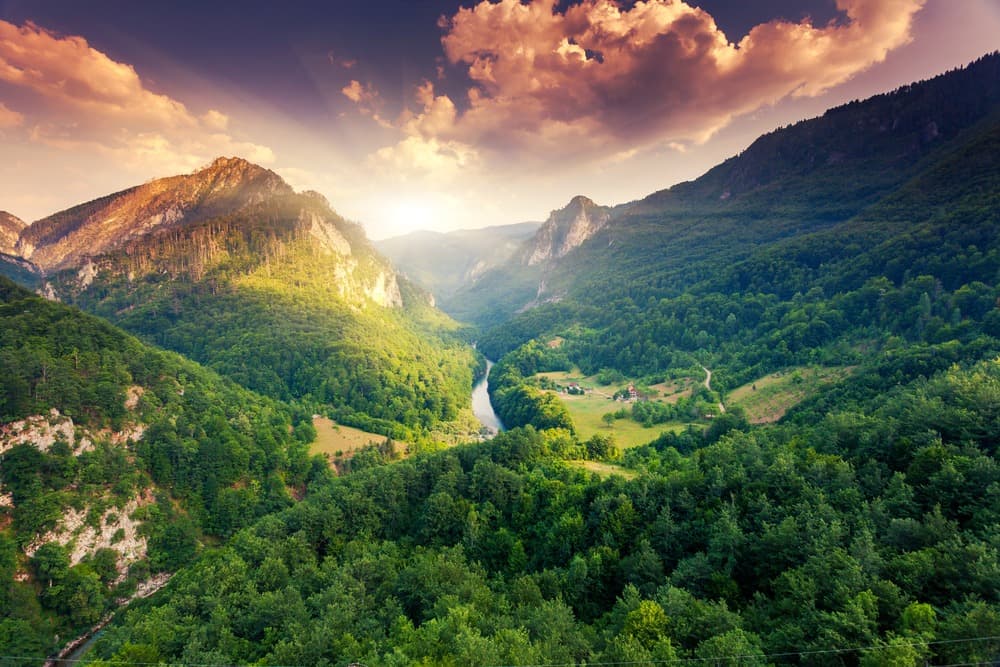
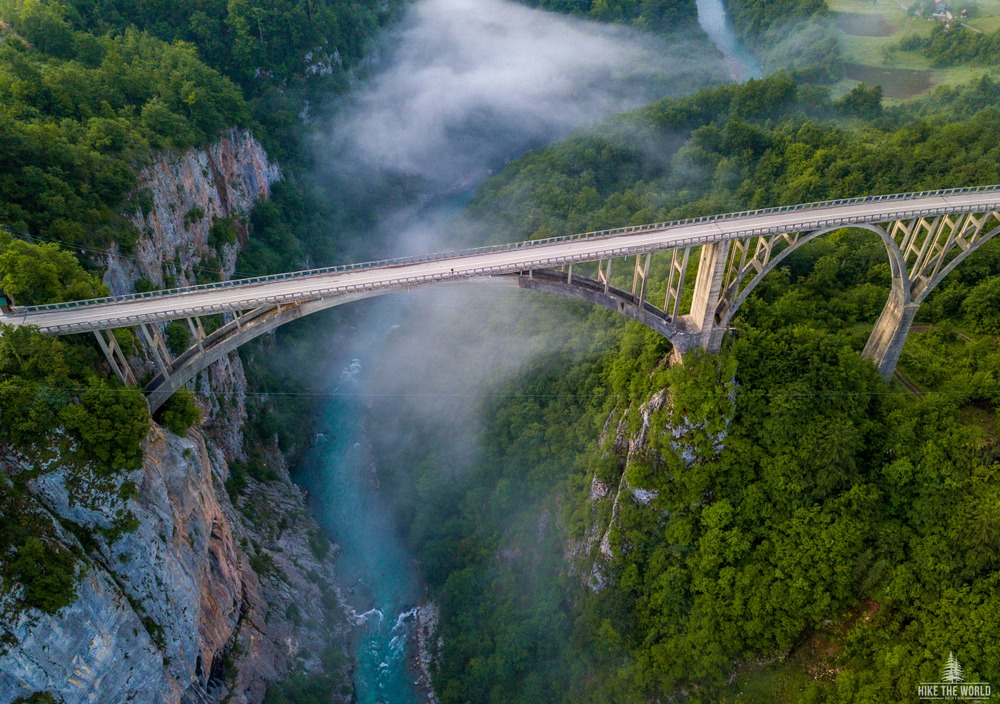
East of the park, the Tara Canyon cuts into the plateau for approximately 80 km and reaches over 1,000 m in depth. It is best viewed from the Đurđevića Tara Bridge, a structure from the 1940s that has become an unmissable stop. It is also the classic starting point for rafting descents on the river, navigable from late spring through summer.
Flora and fauna
The massif is home to nearly 900 varieties of mountain plants, including several protected species: Blagayana daphne, alpine eryngo, Bosnian iris, common yew and edelweiss. On the fauna side, there are golden eagles, alpine choughs, brown bears, deer, foxes, martens and badgers, as well as 8 species of reptiles and 5 of amphibians. Lakes and streams are populated with trout and minnows.
Culture and cuisine
The region is renowned for its mountain cheeses and roasted lamb dishes, to be tasted in the konobas of Žabljak or surrounding villages. In September, the Kostanijada festival celebrates local traditions and the chestnut harvest in a village atmosphere.
When to visit
The park can be visited year-round, but each season corresponds to different activities:
- May to June: alpine wildflowers, full waterfalls, moderate crowds. Some high-altitude trails may still be snow-covered.
- July to September: ideal period for hiking and rafting on the Tara. Greater crowds in August.
- October: autumn colours in the beech forests, soft light, fewer visitors.
- December to March: ski season, with slopes suitable for different levels around Žabljak.
Practical information
- Access: fee-based, with checkpoints at main entry points. Modest daily rate, multi-day tickets available.
- Parking: paid parking near Black Lake and trail starts.
- Equipment: hiking boots, warm clothing even in summer (frequent storms at altitude), water and snacks.
- Accommodation: Žabljak concentrates most of the offer (hotels, guesthouses, rentals).
- Guided activities: rafting, zip-lining over the Tara, jeep safaris and mountain biking offered by local agencies.
How to get there
As public transport is limited in Montenegro, a car remains the most practical option. Two main routes lead to Žabljak:
- From Bosnia and Herzegovina, the M-3 road (E762) crosses the Piva valley and runs along its reservoir lake before reaching the park.
- From Podgorica, the M-6 road heads north through Nikšić then turns towards Žabljak. Allow approximately 3 hours of driving.
From Serbia, the same M-6 road is accessed via Prijepolje and Pljevlja, crossing the Đurđevića Tara Bridge.
Nearby attractions
- Đurđevića Tara Bridge: an iconic structure overlooking the canyon, east of the park.
- Biogradska Gora National Park: primeval forest and glacial lake, approximately 1.5 hours' drive away.
- Morača Monastery: 13th-century Orthodox monastery, on the route between Podgorica and the north.
- Lovćen National Park: another major Montenegrin park, further south, around the Njegoš mausoleum.
Frequently asked questions
Frequently asked questions
One day allows you to see Black Lake and the Đurđevića Tara Bridge. To make the most of the trails, other lakes and possibly climb Bobotov Kuk, plan for 2 to 3 nights in Žabljak.
Not for marked trails around Black Lake or Poda village. However, high-altitude ascents (Bobotov Kuk, traverses) and off-trail outings are safer with a local guide, particularly at the beginning or end of the season.
Yes, several providers based in Žabljak or near the Đurđevića Tara Bridge organize descents, generally from late spring through summer, when water levels permit.
Yes, several easy walks (loop around Black Lake, forest trails near Žabljak) are suitable for children. Sports activities have varying age requirements depending on the provider.
The ski season runs from December to March, with peak snow conditions in January-February. Savin Kuk and Javorovača are the most popular resorts.
Plan your trip
Durmitor fits easily into an itinerary combining the mountainous north and the Adriatic coast. To build a bespoke circuit including the park, Tara Canyon and other Montenegrin sites, consult our Montenegro travel ideas.
Interested in this visit?
We can include it in your personalised itinerary.