Lake Skadar (Skadarsko jezero)
Lake Skadar (Skadarsko jezero)
Lake Skadar, the largest lake in the Balkans, is home to curly pelicans, Orthodox monasteries on islets and vranac vineyards within a protected national park in southern Montenegro.
Lake Skadar straddles the border between Montenegro and Albania, forming the largest lake in the Balkans. On the Montenegrin side, it has been a protected national park since 1983. Its shallow waters harbour remarkable biodiversity: curly pelicans, cormorants, giant water lilies and endemic carp. Fishing villages, medieval fortress ruins and Orthodox monasteries perched on islets make it a territory apart, far from the coastal resort circuit.
Practical info at a glance
- National park entry: paid for boats and certain access points; free on foot from several villages
- Access: Virpazar is the main departure point, reachable by car from Podgorica (around 40 km) or by train on the Podgorica–Bar line
- Recommended duration: half a day minimum for a boat excursion; a full day to combine boating, hiking and a village visit
- Best time: April–June (migratory birds, water lilies in bloom) and September–October (golden light, fewer crowds)
- Attire: bring a hat and sunscreen; monasteries require shoulders and knees to be covered
What you'll see
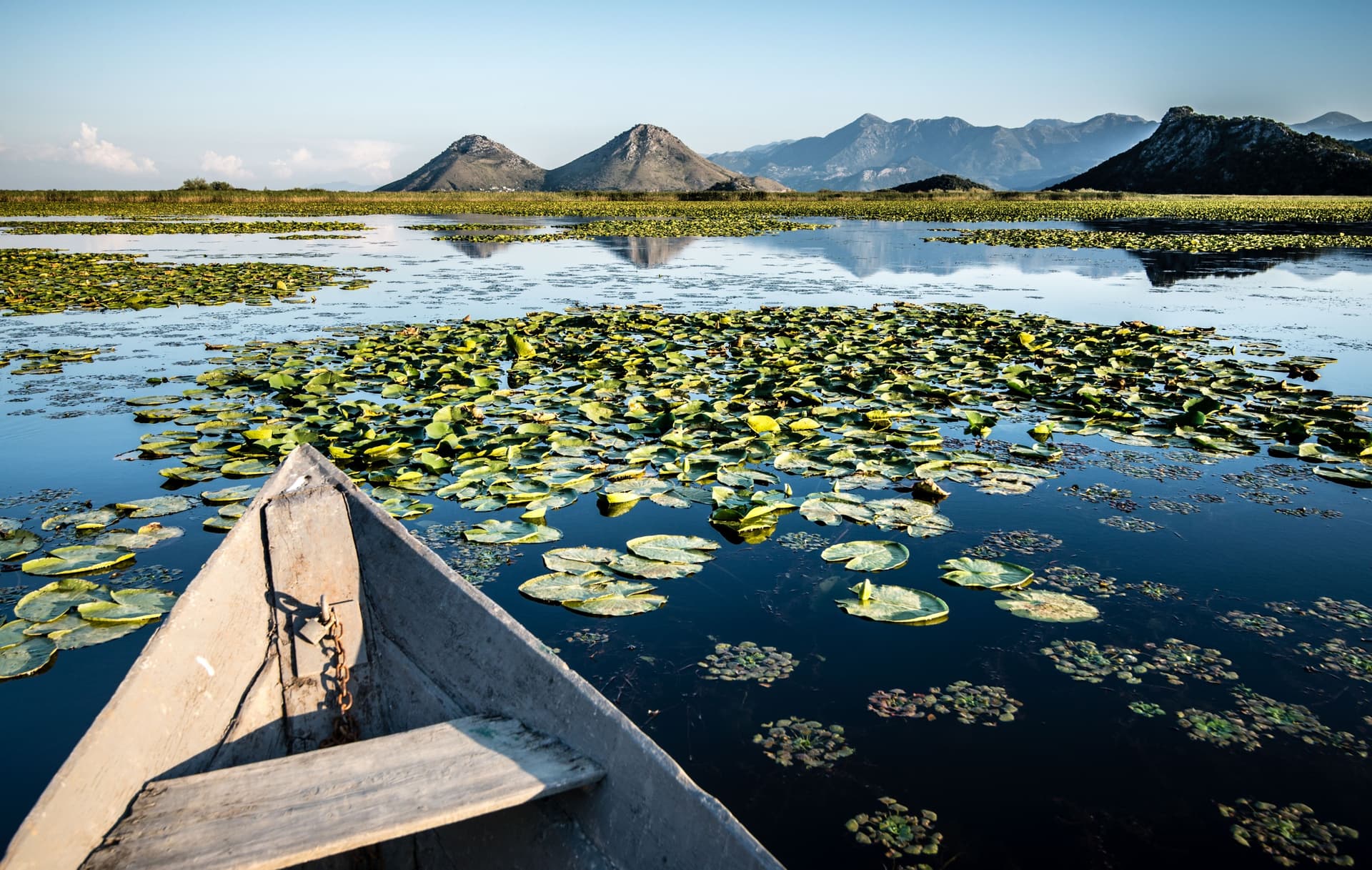
The lake's surface changes with the seasons. In summer, white water lilies (Nymphaea alba) carpet the shallow bays. Reed beds shelter colonies of curly pelicans, a species vulnerable in Europe. Clear waters reveal grassy beds where carp and eel thrive. On the heights overlooking the lake, vineyards produce vranac, the emblematic red variety of Montenegro.
History and context
The lake takes its name from the city of Shkodër in Albania, which controlled its southern shores from antiquity. In the Middle Ages, the Balšić dynasty and later the Crnojevići dynasty established their power here. The fortress of Lesendro, built on an islet in the lake's centre, served as a strategic stronghold against the Ottomans. Several Orthodox monasteries — including those of Kom and Beška — were founded in the 14th and 15th centuries on small islands, now accessible by boat.
Highlights of your visit
Boat excursion from Virpazar
Local boatmen offer two to three-hour trips to island monasteries and birdwatching zones. It's the most effective way to approach pelicans and follow reed beds inaccessible on foot.
Kom Monastery
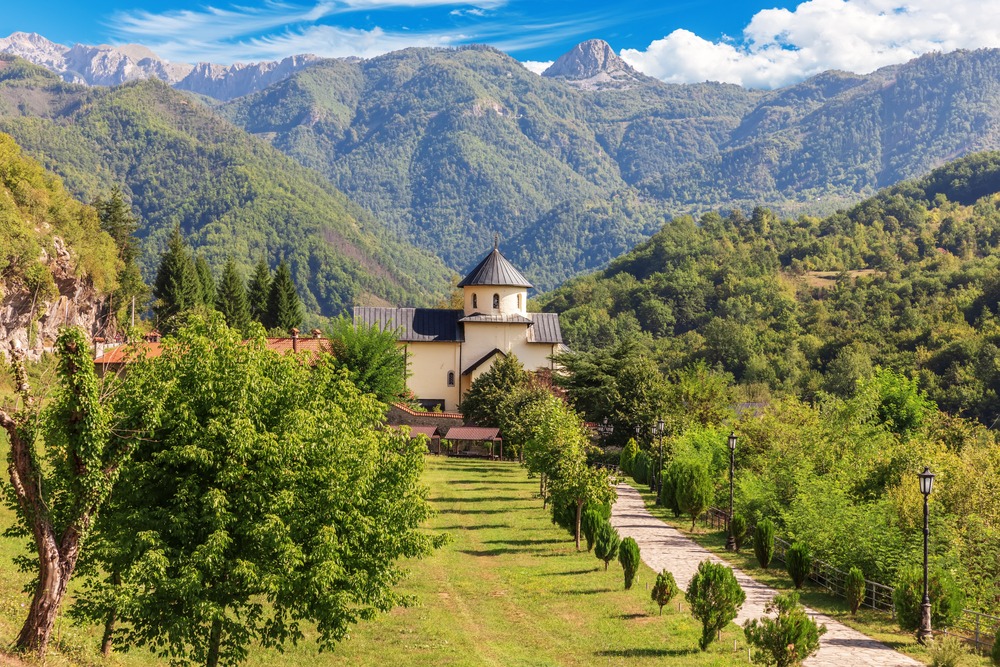
Founded in the 14th century, this Orthodox monastery sits on a rocky islet and preserves medieval frescoes. Access is by boat only. Modest dress and silence in the church are required.
Rijeka Crnojevića village
At the north-eastern tip of the lake, this medieval village was once the capital of the Crnojevići. Its Ottoman stone bridge, fishermen's houses and waterside restaurant make it a popular stop. The approach road offers sweeping views over the lake.
Virpazar–Poseljani hiking trail
This marked trail winds through vineyards and olive groves above the lake. It allows you to observe birds early morning without a boat, with clear views of the islets and the Albanian plain beyond.
Etiquette and visiting rules
- In island monasteries: shoulders and knees must be covered, silence required in places of worship.
- Fishing in the national park is regulated; a licence is required.
- Do not disturb nesting bird colonies, especially between April and June.
- Take all rubbish with you; there are no bins on the islets.
Photography tips
Raking morning light (an hour after sunrise) is ideal for photographing pelicans in flight and reflections on water. In summer, water lilies are in full bloom between June and August. For monasteries, late afternoon light catches the stone facades without backlighting. Drones are subject to national park regulations: check with park administration before any flight.
Location and access
Lake Skadar National Park occupies south-western Montenegro, between the Rumija mountains and the Albanian border. Virpazar, the main access village, is around 40 km south of Podgorica via the E80 motorway. The Podgorica–Bar train line stops at Virpazar, allowing carfree access. Rijeka Crnojevića is reachable from Cetinje by a winding mountain road. Accessibility for people with reduced mobility is limited on traditional boats and unimproved trails.
In the area
- Old town of Bar — ruined medieval city some thirty kilometres south, with an ancient olive grove.
- Cetinje — former royal capital of Montenegro, an hour's drive to the north-west, with museums and monastery.
- Podgorica — modern capital, logistical starting point for the lake, 40 km to the north.
- Bar Riviera — Adriatic coast nearby, to combine lake and sea in a single trip.
Frequently asked questions
April to June for migratory birds and blooming water lilies. September and October offer softer light and fewer visitors. Summer is warm and busy, but water lilies are at their peak.
The Podgorica–Bar train line serves Virpazar station. The journey takes about 40 minutes. From Virpazar, boatmen and kayak rentals are within walking distance of the station.
Yes. Shoulders and knees must be covered at Kom and Beška monasteries. Bring a shawl or lightweight trousers, especially if visiting in summer.
Yes, easily. Bar and its coast are around thirty kilometres from the lake. A day is enough to visit the lake in the morning and reach the sea in the afternoon.
Lake Skadar is a protected national park. Drone use requires authorisation. Check with park administration before your visit to avoid a fine.
Half a day covers a boat excursion from Virpazar. To add Rijeka Crnojevića, a hike and a meal at a fishermen's restaurant, allow a full day.
Interested in this visit?
We can include it in your personalised itinerary.