Cetinje
Cetinje
At once regal and rustic, Cetinje was Montenegro's capital until 1918. Museums, a monastery, and historic embassies tell the story of this singular destination.
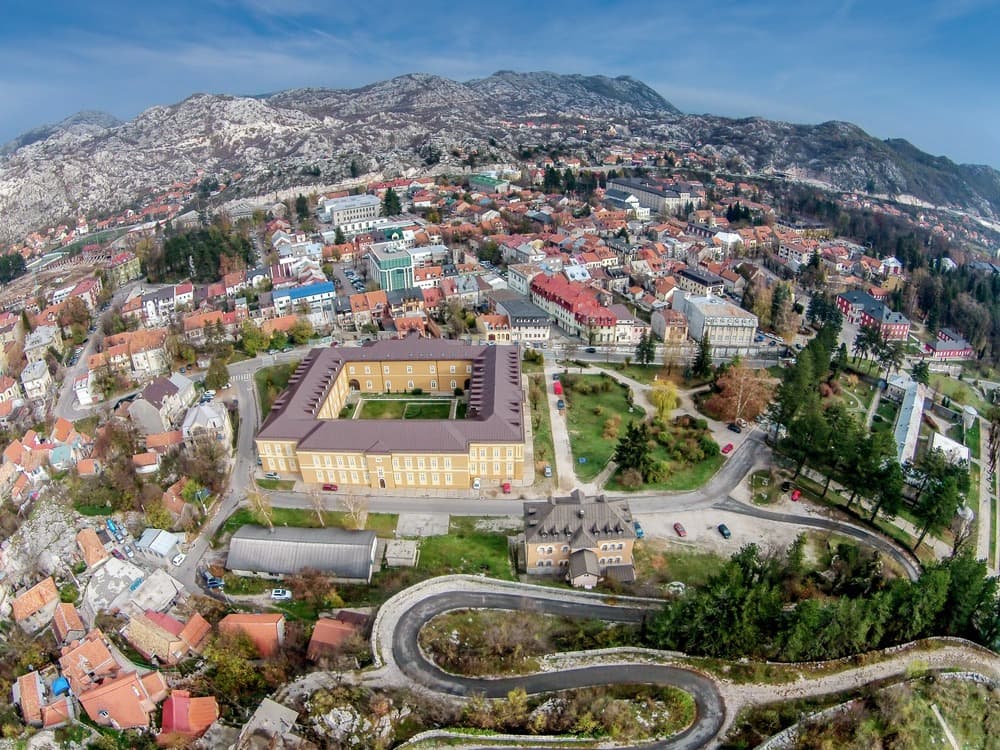
Picture grand manor houses and elegant embassies, then imagine a village reclaimed by nature. Cetinje is somehow both—at once regal and rustic. For many travelers, it's hard to fathom that this town was once Montenegro's capital. Yet wander through its museums and aristocratic residences, and its remarkable history soon becomes clear…
History
When Ivan Crnojević, lord of the Principality of Zeta, capitulated to the Ottoman Empire in 1479, he was forced to surrender his capital, Zabljak Crnojevića. Upon returning to power in 1481, he established Cetinje as the new center of his state. You'll find an imposing statue of this ruler near the main square. Cetinje served as Montenegro's capital until the first Yugoslavia annexed the country in 1918. After World War II, Montenegro became a republic within the federal state of Yugoslavia. Titograd (present-day Podgorica) subsequently replaced Cetinje as the administrative capital.
Discovering Cetinje
Cetinje lies just over thirty kilometers from Podgorica and Budva, and 58 km from Kotor. You'll know you're approaching the town when modest stone dwellings begin appearing along the roadsides. Before that, let the sweeping rocky moorlands enchant you—dotted with thorny vegetation, wild pomegranates, and broom.
Nestled in a mountain valley, Cetinje welcomes you with quiet simplicity on the banks of the Cetina River, from which it takes its name. The town is small and has changed little since the late nineteenth century. Its pedestrian thoroughfare, ulica Njegoseva, evokes Yugoslavia's golden age, when locals would gather on café terraces to chat and sip hot beverages in pleasant weather. Then there's the traditional market square, where local vendors offer fresh regional produce each morning. As for architecture, the buildings sport vibrant colors reminiscent of towns in Bosnia and Herzegovina—a patchwork aesthetic that, while not to everyone's taste, creates a singular temporal charm that defines Cetinje.
Cetinje, a city of museums
Cetinje's museums offer a rich journey through centuries past while revealing the former residences of Montenegro's sovereigns. Begin your circuit at the Palace of King Nikola, then explore the private quarters of the Petrovic dynasty. Next, head to the Ethnographic Museum of Cetinje to learn more about Montenegrin traditions and folklore. The Biljarda Memorial Museum, dedicated to writer and philosopher Petar II Petrovic Njegos, the Miodrag Dado Đurić Art Gallery, the Tomb of Vladika Danilo, and the National Museum Vladin dom are all equally worthwhile.
Don't miss Cetinje Monastery
It's one of the town's major attractions. The Cetinje Monastery carefully preserves in its treasury some of the world's most significant Christian relics: the relics of Saint Peter of Cetinje, the right hand of John the Baptist, the original icon of the Virgin of Philerme, and fragments of the Holy Cross. The building was founded on the site of Ivan Crnojević's former palace. Along with the Ostrog Monastery, it stands as a principal center of Orthodox faith in Montenegro.
The Embassies: attractions in their own right
When Montenegro gained international recognition as a sovereign republic at the Congress of Berlin in 1878, formal diplomatic relations gradually developed with various European nations and the United States. From Serbia to Russia, Belgium, Turkey, France, England—most embassies established themselves in Cetinje in the late nineteenth century, when the town was still the capital. Far more than mere administrative offices, these buildings are architectural gems strongly influenced by Classicism.
Some embassies have found new purposes over time. In the Trg Dvorski sector, the Serbian Embassy now houses the ethnographic museum, while the Bulgarian Embassy became a popular café. Further out from the center, the British Embassy has been repurposed as a music academy, and the Turkish Embassy as a Faculty of Dramatic Arts.
Practical Information
When to visit Cetinje?
Cetinje sits in a small karst plain at approximately 670 meters elevation, framed by mountains including Mount Lovćen (1,700 m). The town enjoys a temperate continental climate. Summers are typically dry and cool, while winters bring substantial snowfall. To avoid oppressive heat while remaining within easy reach of Budva's refreshing beaches, plan your stay in Cetinje for July or August.
By car, it takes at most an hour to reach Cetinje from Kotor, Budva, or Podgorica. Mountain roads are sometimes narrow with numerous curves, though generally in decent condition. Numerous buses run daily between domestic destinations. Check with bus stations for schedules. If stations lack ticket windows, you can purchase your ticket aboard.
The most convenient airport for getting to Cetinje is Podgorica, roughly fifty kilometers away. It regularly operates connecting flights to major European cities including Rome, Budapest, Belgrade, Paris, Frankfurt, and Zurich.
Given its compact size, Cetinje can be explored easily on foot. A single day is more than enough to discover its main attractions.
What to do in Cetinje?
- Trace Montenegro's rich cultural evolution across the ages at the Ethnographic Museum of Cetinje
- Relax on a café terrace along ulica Njegoseva
- Admire the facades of the historic embassies
- Offer a prayer within Cetinje Monastery
- Tour the majestic Palace of King Nikola, and more
Want to discover this destination?
Our local advisors design your tailor-made trip.