Lake Skadar
475 km² of wetlands at the gates of Podgorica, where curly pelicans, Vranac vineyards and 15th-century monasteries compose a little-known interior Montenegro.
In southern Montenegro, Lake Skadar occupies a karst basin of 475 km² at high water, shared two-thirds with Albania. It is the largest body of water in the Balkans, and since 1983 a national park on the Montenegrin side. Our Podgorica agency regularly brings travelers here, as the site is forty minutes' drive from the capital and forms a natural transition between the continental interior and the Adriatic coast.
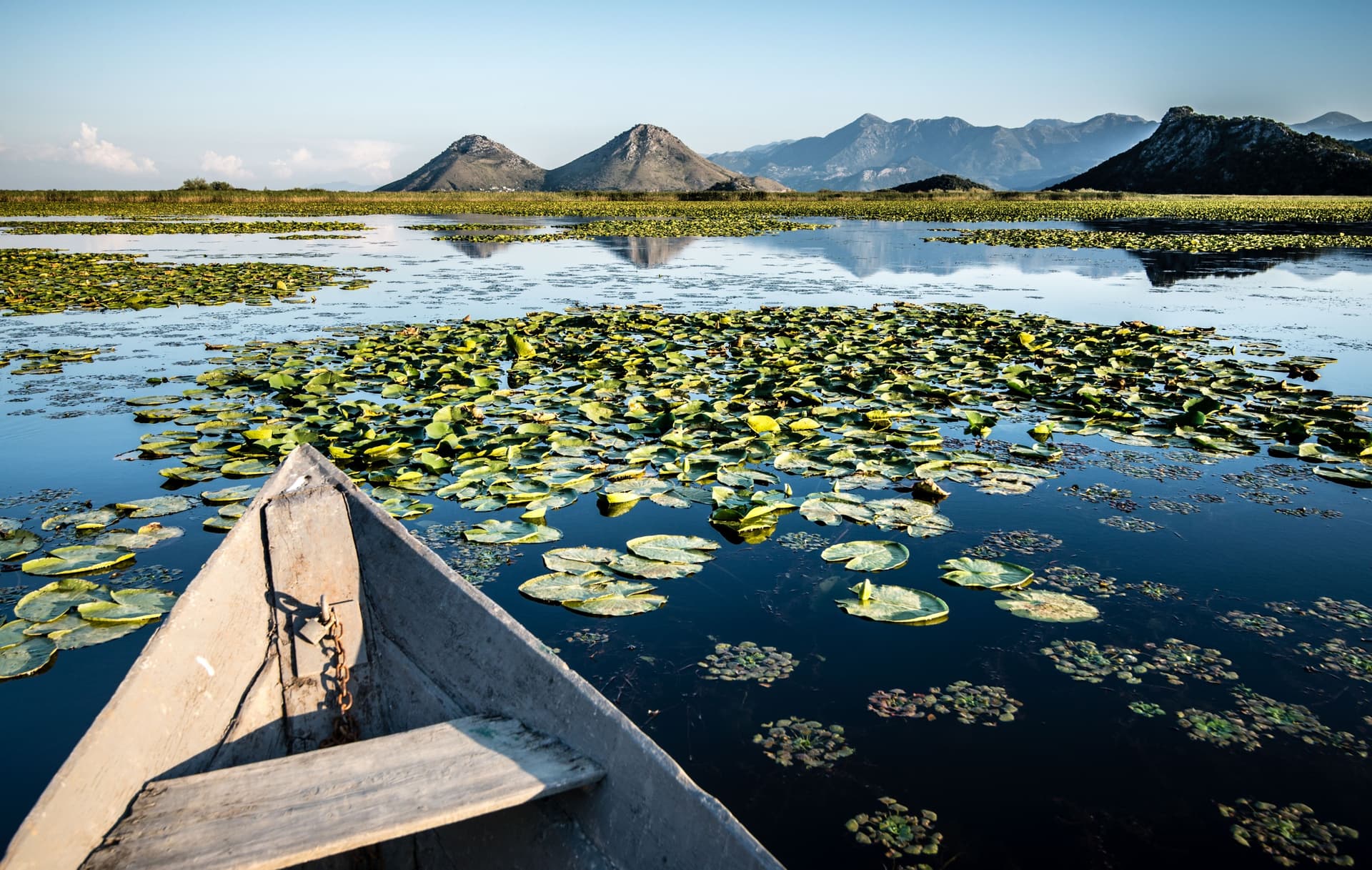
Skadar's geography is distinctive: the lake is fed by the Morača to the north and drains into the Adriatic via the Bojana, but its floor descends in places below sea level—what are called cryptodepressions. This configuration creates sub-lacustrine springs, the oka, which keep the water cool at depth and explain the area's biological richness. The northwestern shores are bordered by the limestone slopes of the Rumija and Sozina ranges, while the southern shore spreads into shallow wetlands covered with white and yellow water lilies that bloom from late May to July.
Ornithology is the primary reason to visit. 270 species have been recorded in the park, with the most emblematic being the curly pelican (Pelecanus crispus), which nests on floating islets in the Pančeva Oka sector. The colony numbers about fifty pairs, monitored by park rangers since the 1990s. You'll also observe pygmy cormorants, purple herons, great bitterns, and during migration, thousands of coots that literally cover certain bays in November. For enthusiasts, we work with two ornithological guides based in Virpazar who venture out at dawn with binoculars and spotting scopes.
On the human side, life around the lake has been organized for centuries around a few fishing and wine-growing villages. Virpazar, on the edge of the Crmnica River, serves as the main embarkation port: this is where flat-bottomed boats depart, outings of two to four hours at 25–40 euros per person depending on the circuit. Rijeka Crnojevića, half an hour's drive away, is more confidential, with its 19th-century stone bridge and its meander photographed from the Pavlova Strana viewpoint. Karuč, Poseljani and Dodoši are former fishing hamlets where you taste smoked carp and bleak (ukljeva) sun-dried, two local specialties served in family-run konobas.
The Crmnica region, which extends south of the lake to the foothills of Sozina, is the birthplace of Vranac, a tannic red grape that makes up 70% of Montenegro's wine production. The family cellars of Limljani, Godinje and Boljevići can be visited in half a day. Expect 10 to 15 euros for a tasting of four wines accompanied by Njeguški ham and sheep's cheese. The Mašanović cellar in Godinje, with hand-cut staves, or the Šipčanić cellar in Limljani are our long-standing partners.
Lastly, the lake preserves traces of Montenegro's monastic past: on islands and headlands, a dozen Orthodox monasteries from the 14th and 15th centuries, founded by the Crnojević dynasty, remain active or in ruins. Beška, Starčevo and Moračnik can be visited by boat from Virpazar and still house a few monks or nuns. Kom Monastery, perched on a peninsula, requires a longer boat approach of two hours round-trip and rarely receives visitors.
To discover
Boat excursion from Virpazar. Three hours on the lake among blooming water lilies from June to August, observation of curly pelicans and a swimming stop in a cove on the northern shore.
Pavlova Strana viewpoint. Views over the horseshoe meander of Rijeka Crnojevića, accessible in ten minutes' walk from the Cetinje-Virpazar road, ideal light in late afternoon.
Crmnica vineyard cellars. Tasting of Vranac and Krstač in the villages of Godinje and Limljani, accompanied by Njeguški charcuterie, in the company of vignerons who still work family plots.
Island monastery of Beška. A 15th-century foundation on an island covered with holm oaks, reached in forty minutes by boat, housing two churches and the tomb of Queen Jelena Balšić.
Karuč and traditional fishing. Village of fifteen houses accessible only by boat or track, where you share lunch at a fisherman's home with grilled carp and dried ukljeva.
When to go
The best period for Lake Skadar runs from April to mid-June, then from mid-September to late October. In spring, temperatures range between 18 and 24 °C during the day, water lilies begin to bloom in late May, and migratory birds return to nest. Autumn offers still-warm waters, a landscape colored by oak and hornbeam forests, and the grape harvest season in Crmnica in early September.
July and August are hot and humid: 32 to 35 °C in the plain, sometimes 38 °C when there is no wind, with humidity of 70 to 80% that makes navigation and walking difficult in the middle of the day. It is also peak season in Virpazar. We advise against December to February, not for the cold (8 to 12 °C during the day) but for rain: the Skadar basin receives up to 4,500 mm per year on mountain slopes, and the lake can double in size, flooding access roads to villages on the southern shore.
Practical advice
Two full days are enough to grasp the spirit of Skadar: one day for boats and birds from Virpazar, a second day devoted to the Crmnica vineyard and Pavlova Strana viewpoint. Those who want to hike the northern shore trail, climb to Kom Monastery, or deepen ornithological observation will benefit from staying three nights. The entry point is Podgorica airport, 35 km from Virpazar by motorway, or Tivat airport 80 km away via Cetinje.
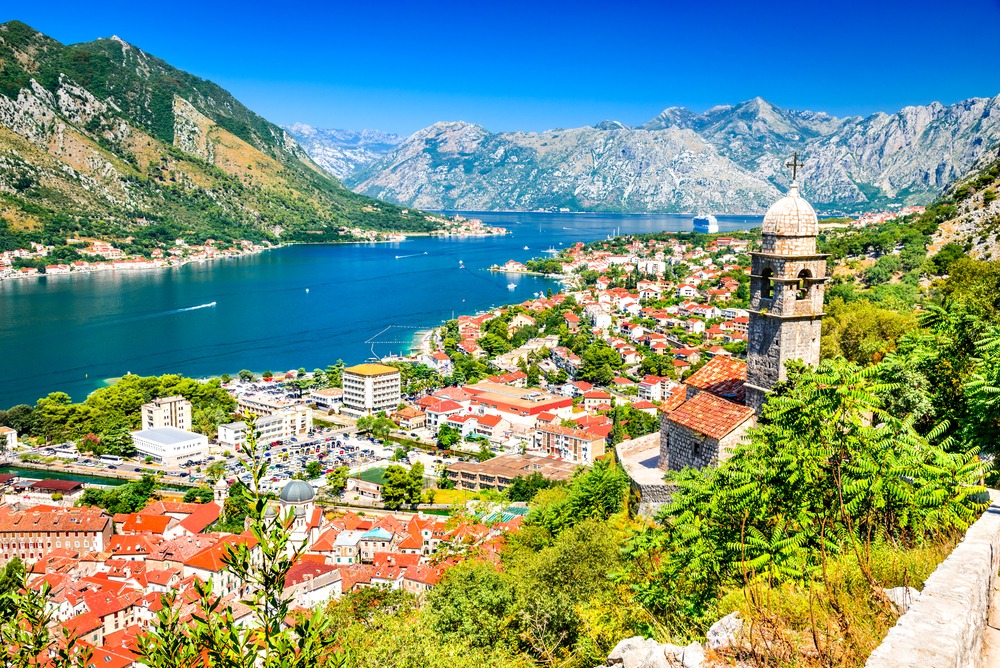
The region combines well with Cetinje and Lovćen, which are geographically contiguous and historically linked to the Crnojević dynasty, as well as with the Bay of Kotor for a short week-long itinerary. For a twelve-day trip, we often link Skadar, the Budva-to-Ulcinj coast, then head back up toward Durmitor via the Tara valley. Comfort levels are reasonable: family guesthouses in Virpazar and Murići, two or three more refined addresses in Rijeka Crnojevića, but no luxury hotels. The destination suits contemplative travelers, nature and wine lovers, and families with children over six thanks to low-exertion boat excursions.