The Flag of Montenegro
Montenegro was once a great kingdom, though this monarchical period proved remarkably brief. For nearly eight years, Nicholas I Petrović-Njegoš served as the pretender to the throne before becoming the sovereign prince of the realm.
Montenegro was once a great kingdom, though this monarchical period proved remarkably brief. For nearly eight years, Nicholas I Petrović-Njegoš served as the pretender to the throne before becoming the sovereign prince of the realm. The country's current flag was conceived from the coat of arms of Nicholas I, drawing its inspiration from the golden double-headed eagle.
The Double-Headed Eagle of Montenegro
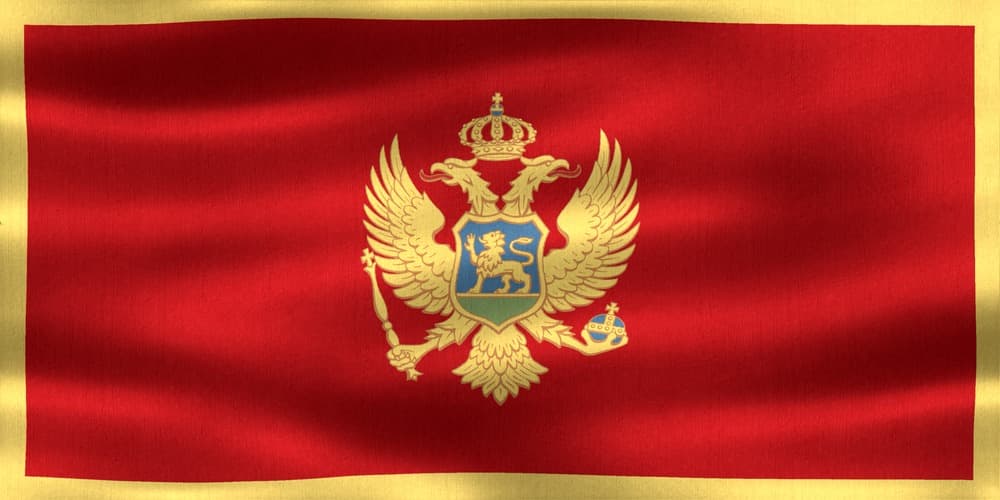
Montenegro's flag retains a majestic quality, despite the nation's shift away from monarchy: a field of royal red, bordered by a golden rectangle (1:2). At its heart stands the illustrious crowned eagle in gold, which holds within its talons a scepter (to the right) and a blue orb crowned with a cross (to the left). Upon the breast of this emblematic creature rests a shield depicting a golden lion on a blue field, its paws upon gilded ground above a meadow green.
The Symbolism of the Montenegrin Flag
- The double-headed eagle represents state power in harmony with the Church
- The crown, a remembrance of Montenegro's royal past
- The two objects held in the eagle's talons symbolize the holders of power and honor Saint George (Saint Patron of Montenegro)
- The golden lion represents the strength of the episcopate
It is important to understand that the flag serves as a national emblem. It represents the country, its values, its history, and its aspirations. Thus, hoisting the flag demands genuine respect.
Among other protocols:
- The flag must be displayed with pride (clean and unwrinkled, displayed properly and never rolled, etc.)
- It must never touch the ground, and when raised, the people must salute it
- It must never be left in shadow; at night, it is illuminated with due care